
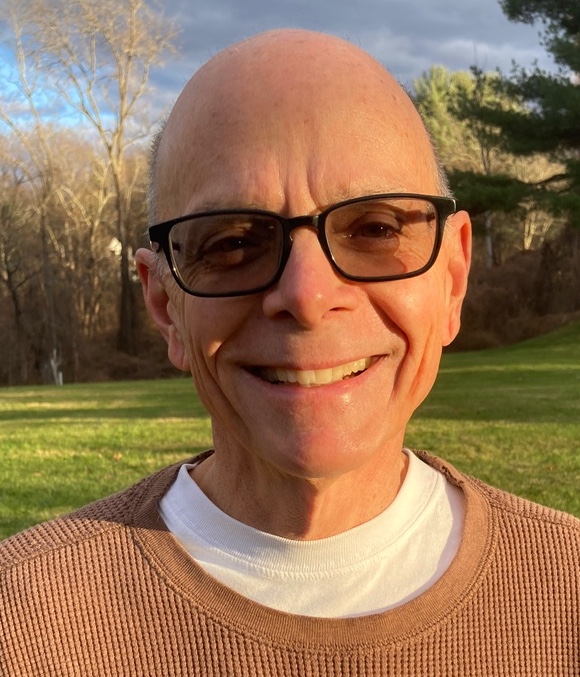
By José Picayo

I am 64 years old, a photographer and a weaver. Like many men, I did not know much about the prostate until I was diagnosed with prostate cancer in 2022. Not knowing or understanding prostate cancer, when one hears the words “you have cancer,” one thinks of dying. Having had my father pass away at 61 from different forms of cancer, memories of his treatments and dealings with cancer came flooding back in my mind.
After blood tests, an MRI, and a biopsy with 16 samples taken, I was diagnosed with favorable-intermediate prostate cancer with one Gleason 6 and one Gleason 7 (3+4). The recommendations from my urologist were surgery, radiation, or active surveillance. I had options.
Before being diagnosed, and after many years of above normal PSA (prostate-specific antigen) tests, during the time I was waiting for bloodwork results was a confusing period with many sleepless nights and many moments of anxiety. After my MRI and before the biopsy, my urologist said there was still a chance the tumor was benign. The biopsy confirmed the cancer, but from what I could see, the cancer wasn’t as high grade as I had expected. Genomic testing also showed low risk.
Still not understanding my different options, not understanding the implications of not having a prostate, and not understanding the possible negative side effects of going through treatment, I thought, “Why not just take the prostate out?” I realized that removing it possibly wasn’t the best answer, and as time went on, I decided that surgery would be my last choice and active surveillance my first choice.
My urologist, although being a surgical oncologist, never pushed surgery over other forms of treatment. Instead, he said I had time to decide and suggested seeing other oncologists with different specialties for their opinions.
That’s when my investment into researching prostate cancer started. Besides looking at the medical information available, I spoke to friends, family members, and friends of friends who were unknown to me before this, and different oncologists. After a period of months, and most oncologists agreeing on the three choices, I chose to go on active surveillance.
My urologist mentioned that if my mental health is going to suffer, then active surveillance might not be the right choice. This was the case in the beginning when headaches were frequent and sleeping through the night difficult. My headaches started to go away and sleeping became easier after I got a clearer picture from the MRI.

I always considered myself to have a healthy lifestyle, but I decided that I needed to make some changes. I kept up with my outdoor exercise through the winter, changed my diet, joined support groups, and changed how to deal with the mental side by adding meditation and therapy while continuing with my daily activities.
Photography has always been important – and therapeutic – to me, but in 2014, after going through three rounds of MOH’s surgery for skin cancer on my ear, I decided that I needed something new creatively in my life. That’s when I discovered weaving. Trying to stay balanced mentally through all of this was challenging, and weaving gave me a new option to remove myself from this.
If I had anxious moments, that would show up out of nowhere, I’d turn those moments off by closing my eyes and breathing, going for a walk in the woods, taking photos, gardening and now weaving.

The relief that weaving provided for me led me to teach weaving to other cancer patients at a hospital in New York City. Weaving not only allows the students to remove themselves from their dealings with cancer for the time spent in class, but it allows me to do the same. It is also very satisfying for me to be able to give that to other cancer patients, and be with a group of people with something in common. Having cancer can be a lonely world and speaking to friends and even family can become hard after initial conversations. That’s why finding the right support system is important.
Being diagnosed with prostate cancer can be very confusing in the beginning. Because it is slow growing in many cases, it is important to take the time to do research, but mainly, to not panic. I know that I have prostate cancer, but many men live a lifetime with it and will die with it not knowing it, and not from it.
I know that I have done as much as I can in dealing with this now. I have great support from my wife and children, and I found the right urologist to guide me in the right direction, and I’m thankful for him.
Views on how to deal with prostate cancer are changing rapidly, new studies are being presented, and treatment options are being offered. It’s important to realize that the treatment option that we choose is our choice and it also is the right choice. For me, there have been more positives than negatives from having prostate cancer. Now that my decision has been made to go on active surveillance is done, I can only deal with the present. I’m living in the “now” and enjoying every day.
Originally from Cuba, José Picayo lives in New York City with his wife of 42 years. A photographer and weaver, he enjoys spending time with his three adult children, gardening, hiking, and birdwatching. Jose recommends knowyourpsanumber.org for more information about prostate cancer.
Thank you, José, for sharing your story of courage and hope with our readers.
If you have a story to share with our readers about participating in a clinical trial, overcoming adversity, or living with a chronic condition, please let us know. We’d love to have you guest blog for us. Guest blogging helps others learn about your struggles and increases awareness and understanding. Contact us at blog@corevitas.com to get started sharing your story now.